There is a subtle danger facing many believers and churches today—not laziness, not apathy, but something far more deceptive: productivity without fruitfulness.
Church calendars are full. Programs are running. Social media posts are scheduled. Sermons are preached. Volunteers are busy. Metrics are tracked. From the outside, everything looks alive.
And yet, beneath the motion, something essential may be missing.
When Activity Replaces Abiding
Scripture never measures faithfulness merely by activity. Jesus never said, “By this My Father is glorified, that you stay busy.” Instead, He said the Father is glorified when we bear much fruit.
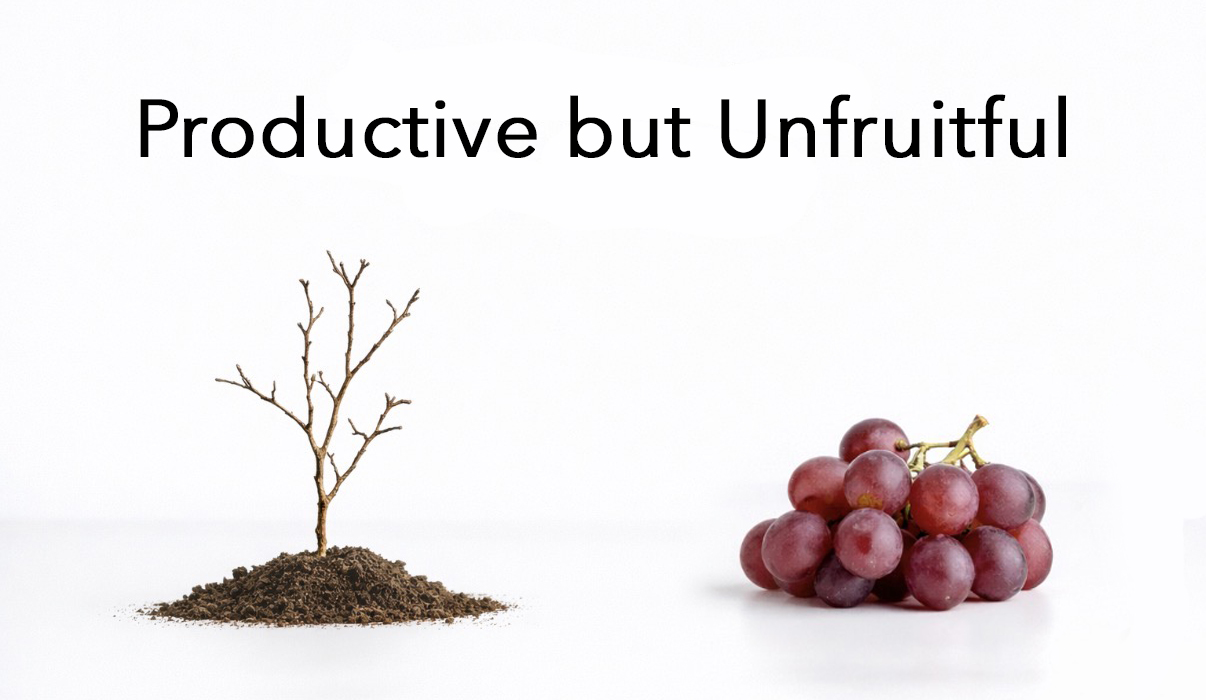
Fruit, in biblical terms, is not synonymous with output. Fruit is the result of life—life flowing from connection to Christ. Productivity, however, can exist without life. Machines are productive. Assembly lines are productive. Even religious programs can be productive.
But fruit requires abiding.
When abiding in Christ is replaced by striving for results, the church may still grow outwardly while slowly hollowing inwardly. We begin doing things for God that He never asked us to do apart from Him.
The Illusion of Faithfulness
One of the most dangerous assumptions a believer or church can make is this:
“Because we are doing many things, we must be doing the right things.”
But Scripture repeatedly warns that outward success can coexist with inward barrenness.
A church can:
- Host events yet fail to make disciples
- Preach sermons but not embrace the Word
- Sing worship songs without adoring the Lord
- Serve communities without loving people
- Teach Scripture without repentance from sin
The fig tree Jesus cursed was not dead. It was full of leaves. It looked healthy. But it bore no fruit. And Jesus’ judgment was not against inactivity—but against appearance without substance.
Why We Drift Toward Productivity
Productivity is measurable. Fruitfulness is not always immediately visible.
We can count attendance, offerings, downloads, views, volunteers, and programs. But fruit—repentance, holiness, humility, love, endurance, faith—often grows quietly and slowly.
In a results-driven culture, churches can feel pressure to prove effectiveness. Over time, this pressure subtly reshapes priorities. Prayer becomes preparation instead of dependence. Scripture becomes content instead of authority. Ministry becomes about performance instead of people.
Eventually, we may find ourselves maintaining momentum rather than pursuing maturity.
Fruit Always Costs Something
Biblical fruitfulness is costly.
Fruit requires:
- Pruning
- Waiting
- Submission
- Repentance
- Dying to self
Productivity, by contrast, often rewards speed, visibility, and control.
This is why fruitfulness can feel inefficient. It slows us down. It exposes us. It forces us to ask uncomfortable questions—not just “Is this working?” but “Is this faithful?”
A church can avoid those questions for a long time by staying busy. But eventually, the absence of fruit becomes evident—especially in moments of trial, suffering, or cultural pressure.
The Quiet Signs of Fruitlessness
Fruitlessness rarely announces itself loudly. It shows up quietly:
- Shallow conversions
- Minimal biblical literacy
- Little hunger for prayer
- A lack of passion for souls to be saved
- Resistance to correction
- Fear of truth
- Division beneath unity language
- Comfort replacing conviction
The danger is not that churches are doing nothing. The danger is that they are doing everything except what produces lasting fruit.
Returning to the Source
The solution is not fewer activities—it is deeper roots.
Fruit does not come from better strategies but from renewed dependence. It flows from lives and churches that are willing to slow down, listen, repent, and realign.
Fruitfulness begins when we ask:
- Are we abiding or merely operating?
- Are we forming disciples or managing programs?
- Are we hearing God’s Word or just teaching it?
- Are we willing to be pruned, even if it costs growth?
When a church returns to abiding, some activities may fall away. Some numbers may dip. Some expectations may change. But over time, what grows back will be alive.
The Goal Was Never Productivity
Jesus did not commission His followers to build impressive buildings or programs. He called them to follow Him, to be transformed, and to bear fruit that remains.
The church does not exist to stay busy.
Believers do not exist to stay occupied.
We were created to be alive in Christ—and living things bear fruit.
So here’s the question:
Are you fruitful? Or just productive?
Follow Us:Share these resources: